
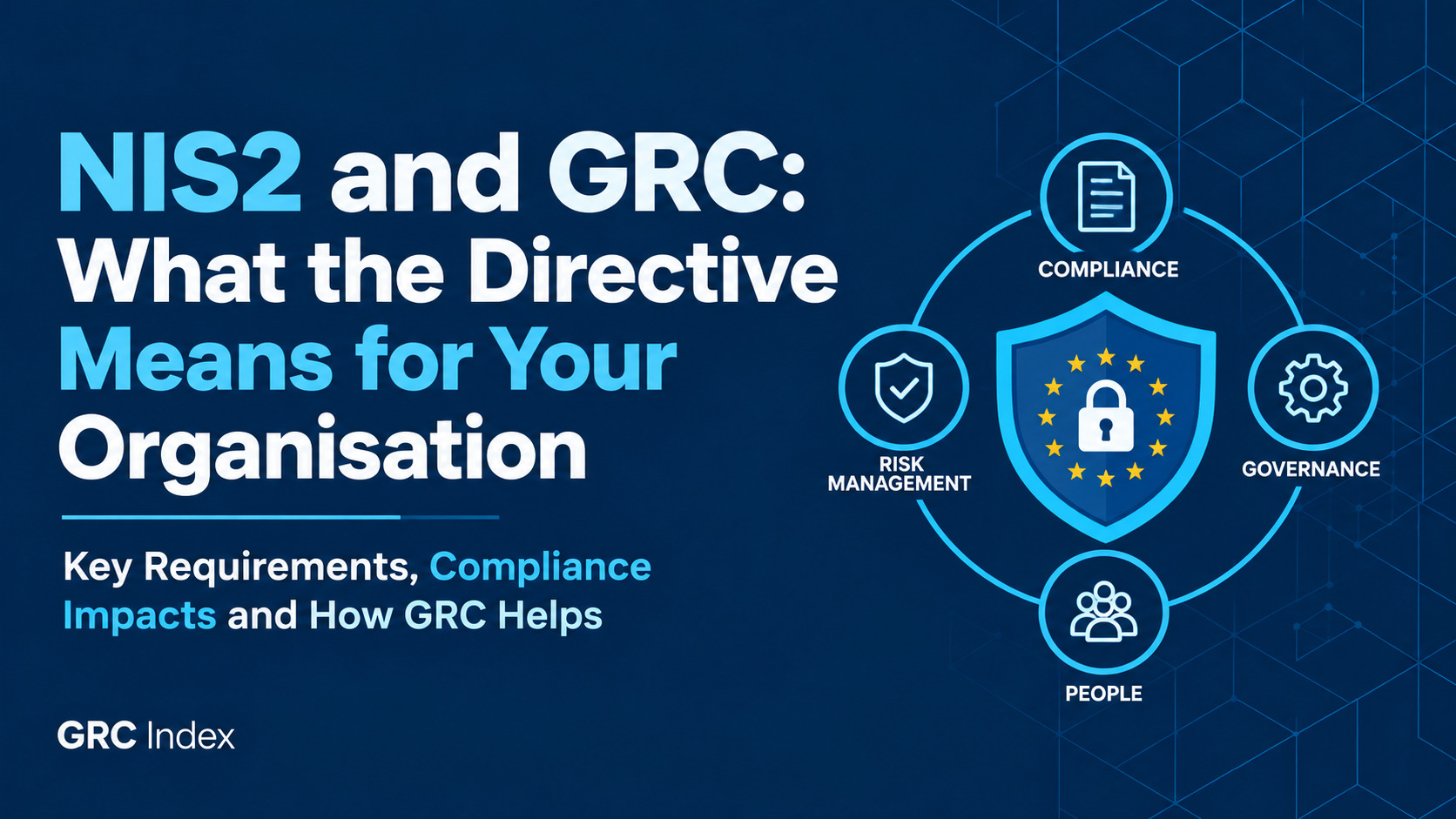
NIS2 and GRC: What the Directive Means for Your Organisation
Your organisation's cybersecurity duties changed under EU law. The NIS2 Directive raises the bar for risk management, incident reports, and governance across a wide range of sectors. A solid GRC framework turns those legal duties into a repeatable process instead of a scramble. You'll see what NIS2 demands and how GRC meets each requirement, section by section.
What is the NIS2 Directive, and why does it matter now?
The new NIS2 Directive is a law from the European Union that aims to make sure that all of its member states have the same high level of safety. It takes the place of the older NIS Directive and adds more areas to the rules, makes reporting stricter, and increases fines. The NIS2 Directive, formally Directive (EU) 2022/2555, replaces the original 2016 NIS Directive. The EU adopted it in December 2022 to raise cybersecurity standards across a far wider set of industries. Energy, transport, banking, health, water, and digital infrastructure firms all fall under its scope now. Their suppliers fall under it too.
The numbers show the scale of this change. NIS2 covers an estimated 160,000 entities across the EU, up from roughly 10,000 under the old directive. Member states had until October 17, 2024, to make NIS2 part of their own laws.
Transposition still isn't complete in some countries as of early 2026. The directive's duties apply through national measures regardless. You should treat NIS2 as active law today, not a future project.
Does NIS2 apply to your organisation?
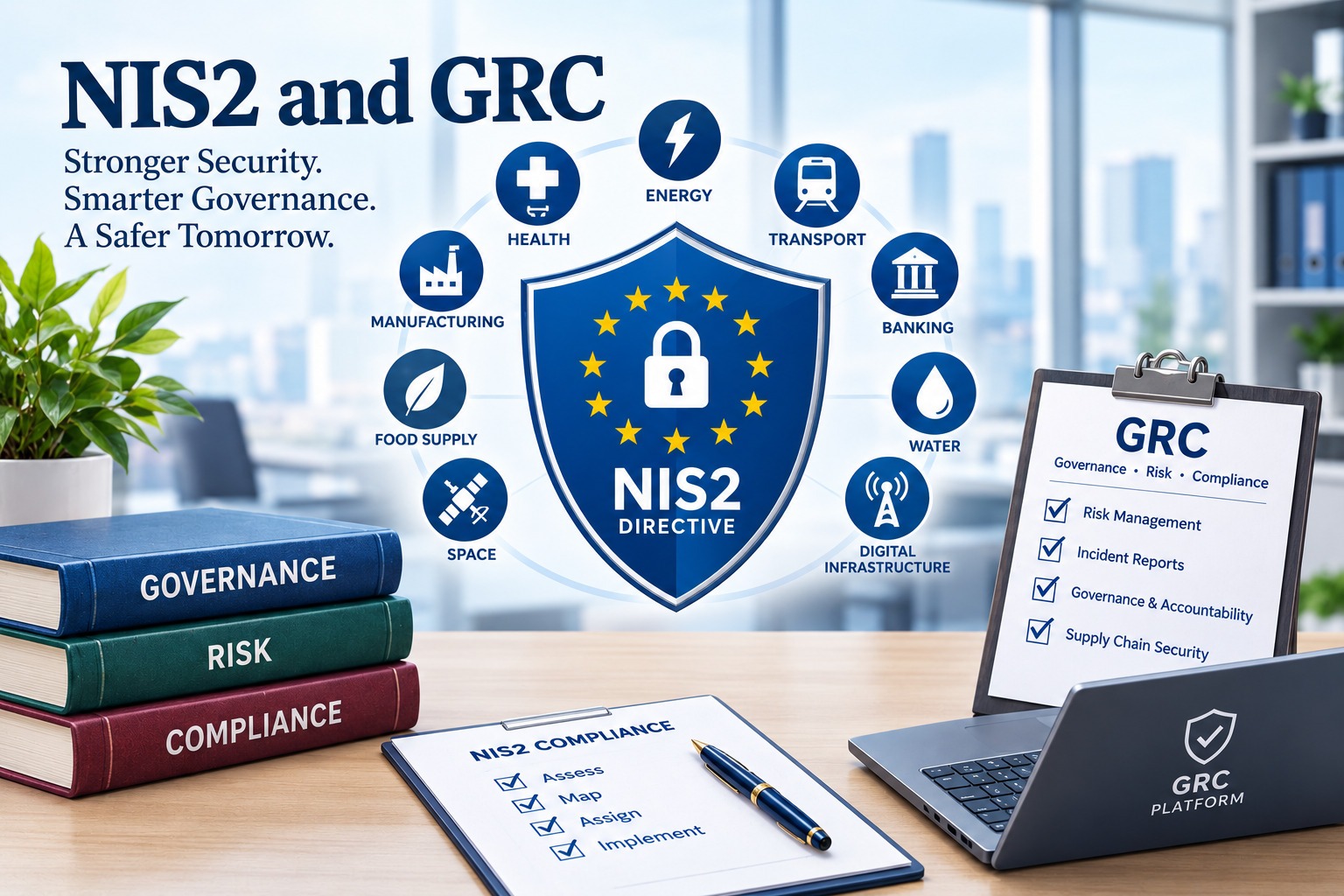
NIS2 splits organisations into two groups, essential entities and important entities. Essential entities sit in critical sectors like energy, health, finance, Transport, Banking, Water, digital infrastructure, space, ICT service management, and public administration. Important entities include postal services, manufacturing, food supply, digital providers, chemical makers, postal & courier services, waste management, and research. Size matters too. The threshold sits at 50 or more staff and an annual turnover above 10 million euros. Ten specific categories, such as trust service providers and domain registries, fall under NIS2 no matter their size.
Your own supply chain can pull you in as well. A software vendor to a hospital, for example, faces indirect pressure from NIS2 even without direct coverage. You should check your sector and your customer base against the criteria. Both routes lead to compliance. Our NIS2 scope check helps you confirm your status in a few minutes.
What does GRC mean, and how does it connect to NIS2?
GRC stands for Governance, Risk, and Compliance. It is a strategy that helps a company manage its business goals, deal with threats, and follow the rules. Instead of separate tools for each regulation, a GRC platform gives you one system of record.
NIS2 is not a rival to GRC. NIS2 sets specific cybersecurity duties. GRC gives you the structure to meet them. A mature GRC programme already tracks risks, logs incidents, and assigns owners for compliance tasks. NIS2 simply adds new rules for a GRC system to absorb.
You can think of GRC as the engine and NIS2 as new fuel specs. The engine still runs the same way. It just needs the right fuel to pass inspection. Our GRC platform overview breaks down how this works in practice.
Which NIS2 requirements does a GRC framework help you meet?
NIS2 sets four core duties. GRC tools map to each one directly.
The table above shows the shape of the work. The depth still depends on your sector. A financial firm and a water utility face different technical rules under NIS2. ENISA publishes free technical guidance for each sector. Your GRC platform should let you customise checks without a full rebuild.
What happens if you ignore NIS2?
For organizations, leaders not following the NIS2 Directive face harsh financial penalties, operational limits and personal liability. Entities that are necessary could be fined up to 10 million euros or 2% of their worldwide annual sales, whichever is higher. Important entities face slightly lower caps. The numbers still sting regardless.
Some countries allow a temporary ban from management roles too. A breach also damages trust with customers and partners. That damage often outlasts any fine. You should treat non-compliance as a business risk, not just a legal one. A cyberattack under a weak GRC setup spreads further and costs more to fix.
How ready is your GRC strategy for NIS2?
A short self-check proves where you stand. 5 quick questions can show you what the actual gaps are.
- Does your risk register cover cyber threats specifically?
- Does your team have 24 hours to report a major incident today?
- Do your board members receive regular cyber updates?
- Do you check supplier security as part of vendor selection?
- Does your GRC tool update automatically when a rule changes?
A yes to all five puts you close to ready. A no to two or more points indicates real gaps. Either way, many organizations are already offering other frameworks like ISO 27001 or GDPR. Those controls carry over to NIS2 directly. Your current GRC maturity counts for more than you might expect.
What are your first steps toward NIS2 compliance?
As a first step toward NIS2 compliance, you need to figure out if your business is an essential or important entity based on its size and type. Then you should start with a full audit of your current risk and compliance setup. Then you should also map every process against the four NIS2 duties above. That step highlights your gaps quickly.
Next, you should assign clear owners for each requirement. NIS2 rewards accountability. A named owner for incident reports, another for supplier checks, and another for board updates puts you ahead of most peers.
In the end, you should pick a GRC index platform that can be built for regulatory change. Rules shift fast. A rigid system falls behind. GRCI's NIS2 compliance module maps every requirement above straight into your current workflow. You spend less time on paperwork and more time on real security as a result.