
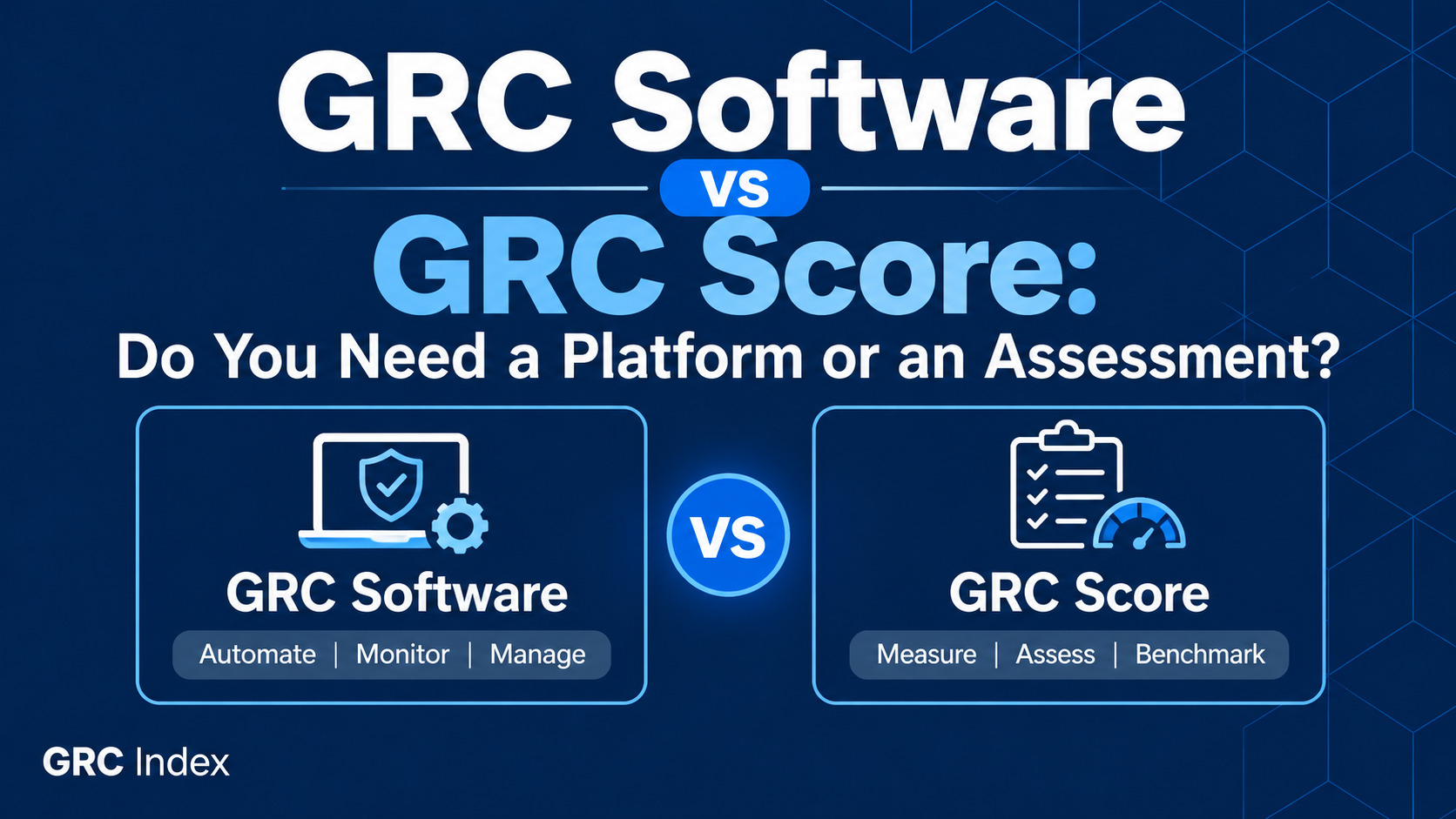
A GRC score (or assessment) gives you about risk, maturity, or compliance readiness at a certain point in time. GRC software, on the other hand, keeps records and manages controls, evidence, and audits at all times.
Most organisations should start with an assessment. It shows you where the gaps are and what to fix first. You should buy GRC software when you must run controls and evidence for several frameworks every month. Many teams use both, in that order.
For example a customer asks for proof of your controls. A new rule lands on your desk. Then a vendor offers you a GRC platform. The honest answer depends on how much of your GRC work already exists.
We run the GRC Index, so we see the choice from both sides. We do not sell GRC software, and no vendor list sits in the article. You will find clear tests, three tables, and a simple order of steps for UK and European organisations.
What is a GRC platform, and what does it do?
A GRC (Governance, Risk, and Compliance) platform is an essential piece of software that helps businesses match their business goals, handle risks, and meet policy or regulation needs all in one place. It usually covers a risk register, a policy library, a control library, evidence collection, and audit workflows. Many platforms also map one control to several frameworks, such as ISO 27001 and SOC 2, so you collect evidence once. Some add third-party risk checks and automatic control tests.
A platform does not think for you. It stores your decisions, reminds people to act, and keeps an audit trail. It cannot tell you if your controls are good. It also cannot give a buyer independent proof. Platforms range widely. Some are light tools built for ISO 27001 and SOC 2 readiness.
What is a GRC score, and what does it measure?
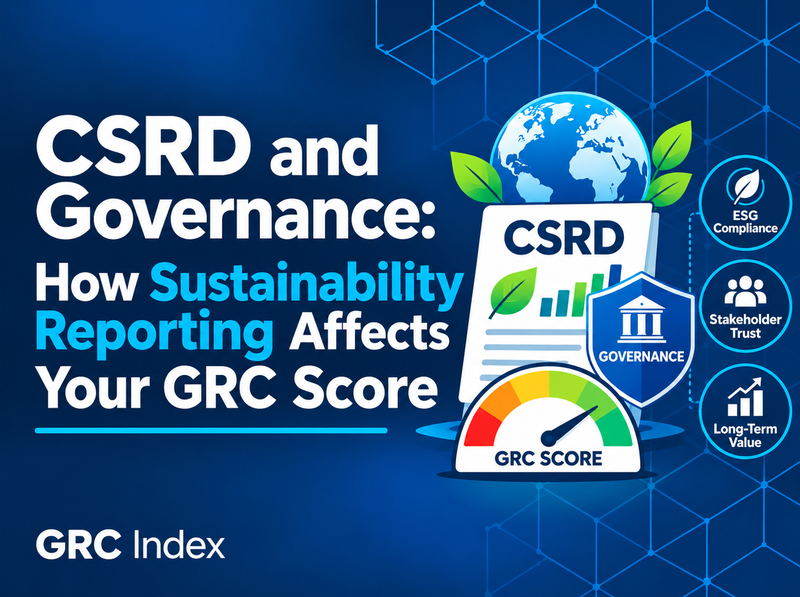
A GRC score is a number or a grade based on development that shows how well a company handles Governance, Risk, and Compliance across all of its activities. Instead of using a single formula, it is usually figured out by looking at GRC metrics, audits, and maturity assessments. It is often given on a scale from 0 to 100 or 1 to 4 or linked to maturity levels.
You can start your free self-assessment. It takes about nine minutes and gives you a first score. A verified score follows only after our team reviews your documents. A score is not a certificate, and a self-assessment alone is not independent verification. The score rewards evidence, such as certifications, qualified staff and completed courses. Buyers can then compare organisations in the GRC Index on one scale.
What is the real difference between GRC software and a GRC score?
A GRC score is a one-time number that shows how well a company meets governance, risk, and compliance standards. GRC software is an ongoing system that keeps track of policies, risks, controls, and audit proof. In short a Software runs the work. A score shows the result. A platform is your kitchen, and a score is the sticker on the door. Both matter, but they answer different questions.
This table shows why the two options rarely compete. A platform needs defined processes before it adds value. A score needs only your honest answers and your documents.
Which one should you start with?
You can answer five questions to find out.
- Do you know your gaps against the frameworks you must meet?
- Are your processes written down, with a named owner for each?
- Must you collect evidence for more than one framework every month?
- Does one person or team have time to run a tool?
- Does a buyer or regulator want clear proof soon?
If you answer no to questions one and two, start with an assessment. If you answer yes to questions one to four, a platform will repay its cost. A yes to question five points to a score, because the first result takes minutes.
Here is a simple example. A software firm with 40 staff gets a tender that asks for ISO 27001. Its policies sit in a shared folder, and nobody owns risk. A platform would store those documents but would not write them, so the firm needs a gap list first.
What signs point to an assessment first?
You should start with an assessment if any of the points below sound familiar.
- A customer asks for named proof of your controls, and you have no clear answer.
- You face your first audit or your first tender with security questions.
- Nobody owns risk, and policies sit in shared folders.
- Your board asks where you stand, and you cannot give one number.
- You cannot tell if you need Cyber Essentials or ISO 27001.
An assessment answers each point in the right order. It names the gaps, ranks them, and gives you a baseline. A gap analysis against one standard does the same job for a single framework, as our ISO 27001 gap analysis guide shows.
What signs point to a platform?
A platform earns its place when the workload grows past what a few people can track by hand. The signs below show that point.
- You keep more than one framework, such as ISO 27001 and SOC 2, and the controls overlap.
- Audits come every year, and evidence hunts take days.
- Your risk register lives in a spreadsheet that only two people understand.
- You must track answers from many suppliers.
- A named owner has time to run the tool each week.
Spreadsheets are fine in the beginning. They break when frameworks, owners, and audit dates multiply. The 2026 State of GRC Report, as quoted by Vanta, found that spreadsheets are still the most common tool for risk registers. Most teams outgrow spreadsheets, and that is a normal step, not a failure.
Can you use both, and in what order?
Yes, and the order matters. CSO Online's advice is to sort out people first, then process, and only then technology. A platform works best when it automates a process that already works.
On the usual five level maturity scale, shared data and integration are what separate level 3 from level 4. That is the point where software starts to pay off. You can follow four steps.
- You assess first. You take the free assessment to get a baseline and a gap list.
- You fix next. You write the policies you lack and name an owner for each risk.
- You automate third. You buy a platform when your processes are stable and shared across teams.
- You reassess each year. You compare the new score with the old one.
What does each option cost, and how long does it take?
Cost is only part of the picture. Time is the bigger bill. A platform costs money once a year and staff time every week.
Neither option replaces an audit. ISO 27001 and SOC 2 still need an external auditor, whatever tool you use. A platform makes audit preparation smoother. A score shows buyers where you stand in the meantime.
How do UK and EU rules change the choice?
No UK or EU law names a software product. The rules ask for results, such as risk management, incident reports, and supplier control. The table shows where each rule points.
The UK stays outside NIS2. The NIS Regulations 2018 apply there, and the proposed Cyber Security and Resilience Bill would widen them. Until it passes, UK firms should build on UK GDPR, Cyber Essentials and what customers ask for.
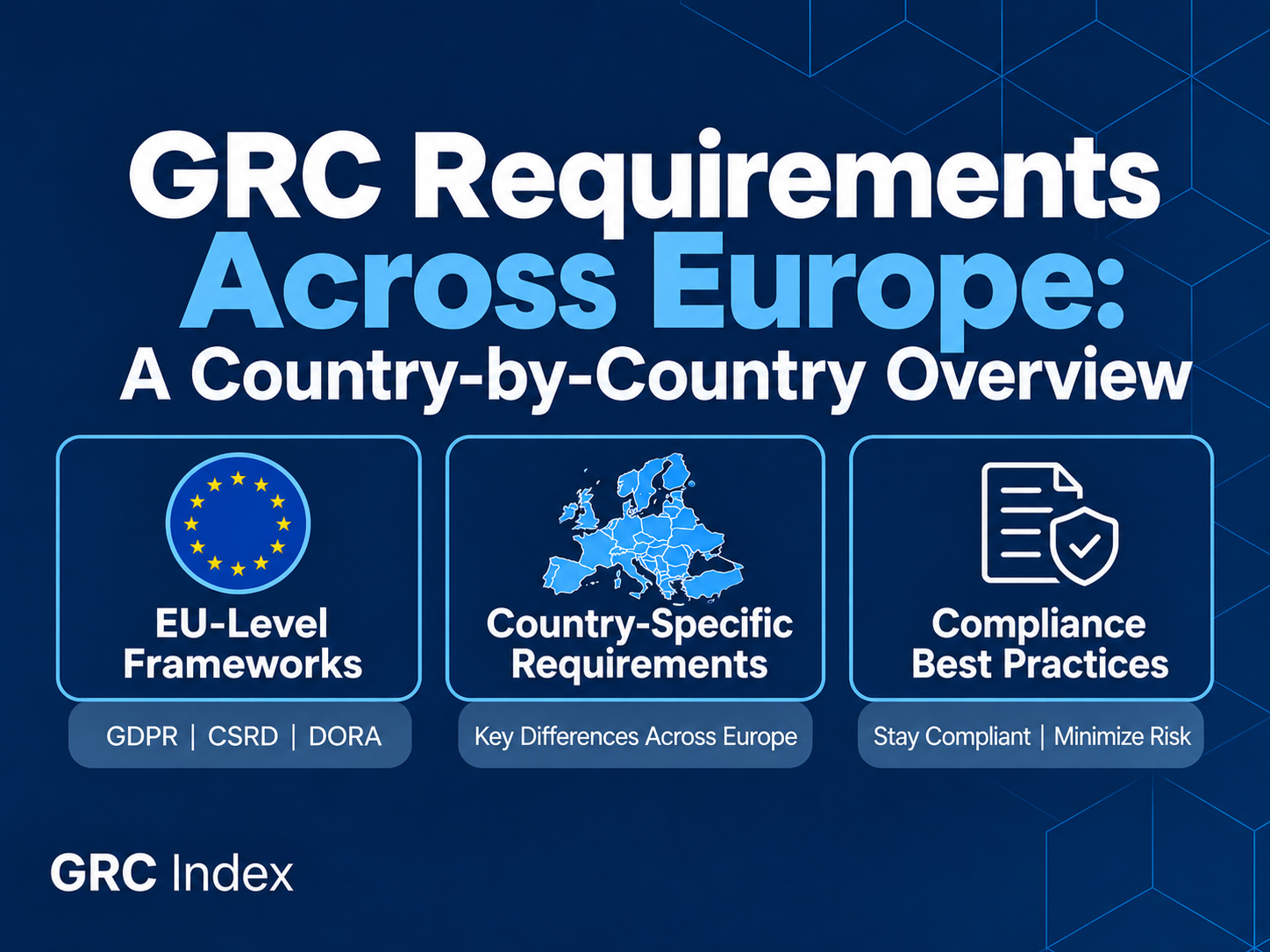
Rules differ by country, and the dates move. You can read our guide to GRC requirements by country sets out the details. Financial firms face the heaviest load, because DORA asks for a live register of third party providers. A platform often pays off there sooner.
What mistakes do buyers make?
Buyers repeat the same errors. Most of them cost time rather than money.
- You buy before the process exists, so the tool only stores confusion.
- You pay for every module, then use two of them.
- You leave the setup for later, and later never comes.
- You give the tool no owner, so records go stale.
- You treat software or a score as proof of compliance, but only an audit proves that.
- You skip the baseline, so nobody can show progress.
Each mistake has the same root. People buy a solution before they name the problem. An assessment names the problem first.
How do you decide in 15 minutes?
You can decide today. You can spend five minutes on the five questions in the decision list above. You can then take the free self-assessment, which needs about nine minutes.
You will finish with a baseline and a clear next step. You can then talk to vendors with a gap list in your hand, not a blank page. That puts you in control of the purchase.
FAQ’s
Which GRC platform is considered the best?
The "best" Governance, Risk, and Compliance (GRC) tool for a business is different for each one. What's best for your business depends on its size, the rules it has to follow, and the technology it already has.
Does GRC software make my organisation compliant?
No. Governance, Risk and Compliance (GRC) software does not immediately make your organization compliant. It is a management and automation tool, not a replacement for true security measures, strict rules, or human responsibility
Is a GRC score the same as a certification?
No, a GRC score is not a certification. A GRC score is a number or rating that assesses how well a business is managing governance, risk, and compliance. A certification is a formal certificate given to an individual or organization after completing an exam or independent audit .
Can a small business use spreadsheets instead of a GRC platform?
Yes, a small organization can utilize spreadsheets instead of a GRC platform, especially if operations are basic, there is little risk exposure, and you are managing just one framework. Global Gurus adds that spreadsheets are a flexible and zero upfront cost starting point for micro-businesses or early-stage firms with minor regulatory requirements.